On Creative Fulfillment
Kyle Sarte 1196 words 6 min
The biggest mistake I ever made as a creative was misconstruing attention for creative fulfillment.
For some time between 2019 and 2021, a small handful of years that saw a peak in my creative output, it was numbers that fuelled my fires. Instagram and SoundCloud’s built-in analytics tools were the perfect trap for someone like me: a lifelong creative, now programmer, with a penchant for data science, and a then-unacknowledged addiction to social media.
View counts, streams, shares, and likes—these were all quantifiable metrics. Data. Figures that mapped to real people interacting with content that I created. Over half a million plays on SoundCloud, thousands of streams on Spotify, hundreds of shares on Instagram. Small numbers, but if I propped them up in just the right light they helped me paint a very specific picture: one of shallow success and external validation. The rush of putting something I made out into the world combined with the ability to track its reach and engagement in real time provided such a potent mix of dopamine that blinded me from recognizing I was mistakenly equating attention to creative fulfillment.
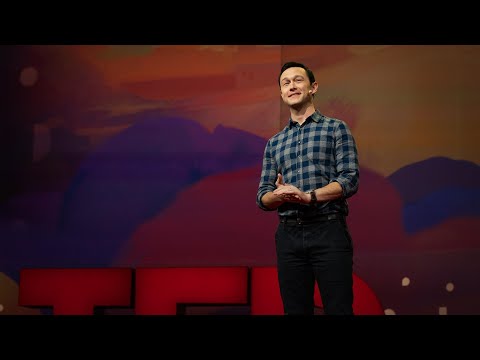
How craving attention makes you less creative
So I left. At some point in 2021, I kept my music, videos, and other content online but got rid of Instagram—my most “successful” marketing tool.
That summer, Ash and I explored much of our little corner of Manitoba, parts of Ontario, and B.C. We had standoffs with overprotective deer, watched black bears tear trees down just outside our campsite, hiked trails, jumped docks, cycled seawalls, and canoed through tunnels to small backcountry islands:

SUMMER IN SUMMARY (2021)
But getting rid of Instagram didn’t suddenly free up time to do all these things; many of these things were just our usual summer past times.
The difference was that I no longer felt an immediate need to turn every experience into a piece of content to be shared online.
The key word was “immediate” because I still carried a camera on me; preserving memories still mattered. People just didn’t need to know what I was up to right now. Things were just allowed to happen.
And this continued fine for a while. Throughout the winter of 2021 into 2022, I focused on my job. I got that raise. Summer arrived, and so did three trips to Toronto. Then Mexico. Then, randomly, Helsinki and Stockholm. And though I was back online by the end of August, I had successfully gotten rid of any prior need to exchange content for numbers, products of my creativity for external validation.
But behind everything happening in other parts of my life, the album covers got stripped from my walls. My guitar, sold, and my piano keys were collecting dust. I had an active Adobe subscription that got used once every other month and had microSD cards full of great, but unedited, footage. Two of my biggest passions, music and video, had softly settled into the background. I went from attending local music shows, online film workshops, jam sessions, and producing new tracks every other week to putting out no new music at all and only the occasional new vlog or travel video. I felt off and didn’t know why.
I was creatively unfulfilled.
There was a flaw I failed to recognize in my attempt to just quit social media.
After years of chasing numbers, creativity, in my mind, could no longer exist without an audience. Why produce a song nobody’s going to listen to? Why edit a video nobody’s going to watch? Now that I’d removed the audience from the equation, anytime I sat down to film a practice session or edit footage I’d ask myself “What’s the point?” and the creative process would stop there.
I genuinely enjoyed the creative process, but not the dependency on external validation. Because the two had become so tightly intertwined over years of wringing them through the same dopamine-driven feedback loop, creative expression was no longer unconditional.
So, the answer was simple. Right? To create only for myself and not tether my art to its audience.
My drive to create has manifested itself in so many different domains throughout my life—music, videography, literature, photography. Even programming. Through all of these, I’ve come to some sort of understanding that while a sole dependency on an audience isn’t sustainable, art does need an audience. My mistake was thinking that the only audience that mattered was the one online. And not recognizing that an audience of one, the creator themselves, counts too.
It’s important to balance this claim with the idea that this dependency of art on its audience isn’t just one-way, either.
Ethan Hawke, one of the many brilliant minds behind my all-time favourite film trilogy (Linklater’s Before) also has one of my favourite takes on the role of art in our lives:
Most people don’t spend a lot of time thinking about poetry. Right? They have a life to live, and they’re not really that concerned with Allen Ginsberg’s poems or anybody’s poems.
Until their father dies. They go to a funeral. You lose a child. Somebody breaks your heart. They don’t love you anymore. And all of a sudden, you’re desperate for making sense out of this life. “Has anybody ever felt this bad before? How did they come out of this cloud?”
Or the inverse—something great. You meet somebody and your heart explodes. You love them so much you can’t even see straight. “Did anybody feel like this before? What is happening to me?”
And that’s when art’s not a luxury, it’s actually sustenance. We need it.
“It’s so beautiful” is the thing that worries me sometimes whenever you talk about creativity because it can have this kind of feel that it’s just nice, you know. It’s warm or it’s something pleasant. It’s not. It’s vital.
And I believe that we are here, on this star in space, to try to help one another. Right? First we have to survive, and then we have to thrive . . . In singing our song and telling our story and inviting you to say, “Hey, listen to me and I’ll listen to you,” we’re starting a dialogue. And when you do that, this healing happens . . . We come out of our corners and we start to witness each other’s common humanity . . . When we do that, really good things happen.
— Ethan Hawke, "Give yourself permission to be creative"
Art as a means of genuine connection serves a purpose beyond the superficial; beyond just entertainment or, in my case, attention and validation. While we could argue against claims of music, poetry, or movies being vital and necessary for life, it isn’t until we’re desperate to feel understood that art is no longer “just nice”. As quoted, “First we have to survive, and then we have to thrive,” and to thrive beyond our basic needs is such an important piece of a bigger picture. However infinite such a metaphorical canvas could be—within it all the things we need to survive—it’s likely that feathered among brushstrokes of what I can only assume include love, companionship, and purpose—pieces of the picture that help us thrive—is creativity.